Why Industrial Floors Fail in Mississippi
Warehouses and factories across Biloxi, Hattiesburg, and Gulf Coast Mississippi face serious wear every day.
Heavy forklifts. Constant foot traffic. Chemical exposure. Humidity. Temperature swings.
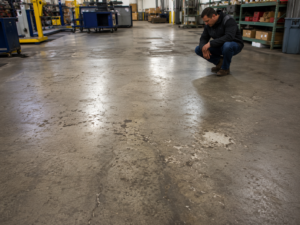
Bare concrete is not built for that level of abuse.
Without a protective coating system, industrial floors begin to:
- Crack under load
- Dust and deteriorate
- Stain from oils and chemicals
- Develop unsafe slick spots
- Require frequent repairs
If your facility relies on smooth, durable flooring to operate safely and efficiently, coating your concrete is not optional. It’s necessary.
Here’s what works best in real Mississippi industrial environments.
What Makes a Good Industrial Floor Coating?
Before choosing a system, it helps to understand what industrial floors actually need.
The best coatings provide:
- High compressive strength
- Impact resistance
- Chemical resistance
- Slip resistance
- Moisture tolerance
- Long service life
In Gulf Coast Mississippi, moisture resistance is especially critical. Concrete slabs here often experience vapor transmission from below due to humid soil conditions.
A coating that fails to handle moisture will peel. Fast.
Polyaspartic Coatings for Industrial Use
Polyaspartic isn’t just for garages.
In industrial settings, it offers:
- Fast cure times
- Strong adhesion
- UV stability
- Excellent abrasion resistance
For facilities that cannot afford long shutdowns, polyaspartic systems are a major advantage. Many warehouses in Biloxi and surrounding areas prefer faster return-to-service schedules.
Best for:
- Distribution centers
- Light manufacturing
- Auto facilities
- Service bays
Its quick curing nature minimizes downtime without sacrificing durability.
Epoxy Systems for Heavy-Duty Environments
Industrial-grade epoxy systems remain one of the most widely used coating types for factories and warehouses.
High-build epoxy provides:
- Thick protective layers
- Strong chemical resistance
- Excellent compressive strength
- Smooth, seamless finishes
In controlled indoor environments like factories in Hattiesburg or Ellisville, epoxy systems perform very well.
However, installation must be handled carefully in humid Mississippi climates. Surface prep and moisture testing are critical to prevent long-term failure.
Best for:
- Manufacturing plants
- Food processing facilities
- Equipment storage areas
- Assembly lines
Urethane Cement Systems for Extreme Conditions
When conditions are harsh — think constant chemical exposure, high heat, or thermal shock — urethane cement systems may be the best option.
These systems are:
- Highly impact resistant
- Thermal shock resistant
- Moisture tolerant
- Extremely durable
They’re commonly used in:
- Food and beverage production
- Commercial kitchens
- Chemical plants
- Heavy industrial environments
While more expensive upfront, urethane cement systems often outlast other coatings in aggressive environments.
Quartz and Flake Broadcast Systems
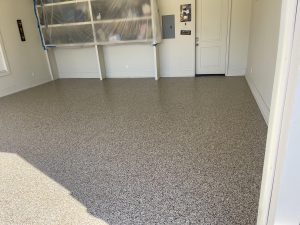
For facilities that need added slip resistance and texture, full broadcast systems offer another solution.
These systems:
- Include decorative or quartz aggregate
- Increase traction
- Add thickness and strength
- Hide minor surface imperfections
They’re often used in:
- Locker rooms
- Washdown areas
- Athletic facilities
- Showroom-industrial hybrids
In Gulf Coast facilities where water exposure is common, slip resistance is a safety priority.
The Importance of Proper Surface Preparation
The coating itself is only half the system.
Industrial floor failures almost always trace back to improper surface prep.
At ICM Coating Masters, we use:
- Industrial-grade grinders
- Shot blasting (when required)
- Crack and joint repair systems
- Moisture vapor testing
Skipping preparation leads to peeling, bubbling, and premature failure.
Warehouses in Biloxi and across Mississippi that invest in proper prep see significantly longer coating life.
How Long Do Industrial Floor Coatings Last?
Lifespan depends on:
- Type of coating
- Thickness
- Traffic levels
- Maintenance practices
- Environmental exposure
General expectations:
- Polyaspartic systems: 10–20 years
- Industrial epoxy: 10–15+ years
- Urethane cement: 15–25+ years
Routine maintenance and proper cleaning extend performance dramatically.
Choosing the Right System for Your Facility
There is no one-size-fits-all answer.
A light-distribution warehouse in Gulfport will have different needs than a chemical processing plant in Hattiesburg.
That’s why evaluation matters.
We assess:
- Traffic type and frequency
- Chemical exposure
- Moisture levels
- Existing floor condition
- Safety requirements
Then we recommend a system designed for long-term performance, not just a quick install.
Why Mississippi Businesses Choose Professional Installation
Industrial flooring is not a DIY project.
Professional installation ensures:
- Correct moisture mitigation
- Proper thickness
- Accurate cure timing
- Long-term adhesion
At ICM Coating Masters, we install commercial and industrial floor systems throughout Biloxi, Ocean Springs, Hattiesburg, Ellisville, and across Gulf Coast Mississippi.
We focus on performance, durability, and safety — not shortcuts.
Protect Your Facility with a Floor Built for Real Work
Your warehouse floor carries more than inventory. It supports your entire operation.
ICM Coating Masters installs industrial floor coatings engineered for Mississippi’s climate and heavy-duty use.
Request your free, no-pressure consultation today and get a system designed to perform — not just look good.